 Bolivia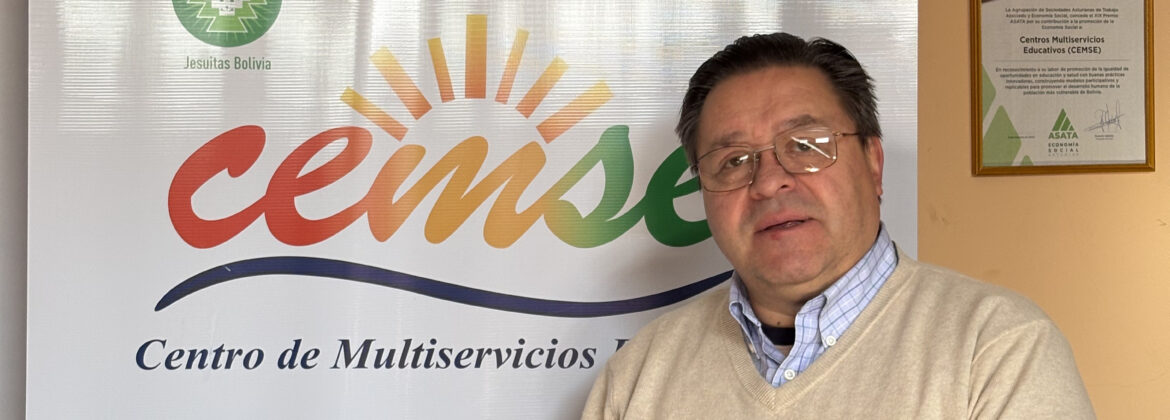
Voices from the Territory: Interview with Federico Escobar, CEMSE
More than a decade of collaboration between Save the Children and CEMSE demonstrates the value of localization in driving sustainable change from within communities. Localization has become a strategic approach to advancing development by empowering those who best understand the realities, challenges, and opportunities of their communities. In Bolivia, this vision has taken shape through long-term partnerships with national organizations that lead transformative processes in their own territories. One of these organizations is the Center for Educational Multiservices (CEMSE), an institution with extensive experience in education and socio-community development.
Since 2012, Save the Children and CEMSE have built a relationship grounded in trust, mutual capacity strengthening, and a shared commitment to creating better opportunities for adolescents and young people. What began as interventions focused on life skills and the prevention of adolescent pregnancy evolved into a broader partnership capable of strengthening institutional capacities, promoting local participation, and fostering support ecosystems for new generations.
CEMSE and Save the Children have worked together for more than a decade. How do you assess this partnership, and what aspects of this shared journey would you highlight?
Federico Escobar: “Our relationship began in 2012, initially working on projects aimed at adolescents and young people in La Paz and Sucre. At that time, we focused primarily on life skills development, the prevention of adolescent pregnancy, and the strengthening of personal capacities. Over the years, the partnership continued to grow and expand into new areas of work.”
“Beyond the programmatic results, I would highlight the institutional strengthening we have achieved. Thanks to the support of Save the Children, we have improved our administrative systems, monitoring, tracking, and procurement processes. In addition, we strengthened our safeguarding policies, a fundamental aspect of working with children and adolescents. This process has enabled us to grow as an organization and respond more effectively to the needs of the communities with which we work.”
From your perspective, what does the localization policy mean, and how have you experienced it as a partner organization?
Federico Escobar: “At first, when we heard people talking about localization, the concept was not entirely clear to us. Over time, we came to understand that it is about strengthening the capacities of local organizations so they can lead programs and projects within their own territories.”
“This approach recognizes that national and local organizations possess experience, knowledge, and close connections with communities. Save the Children has invested in strengthening those capacities, creating the conditions for partner organizations like ours to take on an increasingly prominent role in the implementation and design of interventions.”
How has this approach contributed to CEMSE’s development and strengthening?
Federico Escobar: “One of the most significant advances was the strengthening of our institutional policies. For example, we previously did not have a formal safeguarding policy. With Save the Children’s support, we developed and consolidated tools and protocols that are now a fundamental part of our work. This strengthening not only enhances our capacity for protection and institutional management, but also enables us to access new funding opportunities and work with other donors and international organizations. Ultimately, it strengthens our sustainability and our ability to channel more resources toward communities.”
How does this joint work contribute to the development of adolescents and young people?
Federico Escobar: “From our experience, the starting point is personal empowerment. We work to help adolescents recognize their strengths, identify their capabilities, and build a life project. We believe they must become the protagonists of their own development and have the tools necessary to make informed decisions about their future. We then strengthen life skills, technical capacities, and competencies related to employability and entrepreneurship. Many adolescents need to generate income to continue their studies or support their families, so we work to provide them with concrete training and employment opportunities.”
“One lesson we have learned is that economic development must be accompanied by emotional strengthening. Many young people face situations of violence, vulnerability, or complex family environments. Therefore, socio-emotional skills are just as important as technical capacities.”
What role do local stakeholders play in this process?
Federico Escobar: “No organization can generate sustainable change on its own. That is why we have promoted partnerships with municipal governments, educational institutions, private companies, universities, financial institutions, and civil society organizations. These actors are part of what we call a support ecosystem for adolescents and young people. Thanks to this coordination, it is possible to open training spaces, create employment opportunities, support entrepreneurship initiatives, and establish more favorable conditions for their development. Likewise, this collaborative work has made it possible to influence public policies related to youth, entrepreneurship, and sexual and reproductive health, strengthening institutional responses to the needs of new generations.”
Why is it important for local organizations to participate from the project design stage?
Federico Escobar: “Because we are the ones who have a close understanding of community realities. We can identify challenges, collect information directly in the field, and bring community needs into project planning and design processes.”
“Local participation improves the relevance of interventions and ensures that solutions genuinely respond to the challenges faced by children, adolescents, and young people. It also fosters greater ownership and sustainability of results.”
Looking Ahead
What actions do you consider a priority for further strengthening localization and youth empowerment in Bolivia?
Federico Escobar: “It is essential to continue strengthening public policies aimed at youth employment and entrepreneurship, especially through municipal and departmental governments, which are the institutions closest to the young population. It is also important for more development cooperation organizations to continue investing in the strengthening of local partners, recognizing their capacities and potential to lead development processes. Localization represents a major opportunity to promote solutions that are more sustainable and more closely aligned with the real needs of communities.”
A Partnership that Demonstrates the Power of Localization
The shared experience of Save the Children and CEMSE demonstrates that localization is, above all, a commitment to trust, capacity strengthening, and local leadership. Over the course of more than a decade, this partnership has contributed not only to the growth of a partner organization with a long-standing track record in Bolivia, but also to the expansion of opportunities for adolescents and young people, the creation of territorial support networks, and the strengthening of institutional responses that are more closely connected to communities.
When local organizations have the tools, resources, and recognition necessary to lead development processes, results become more relevant, sustainable, and impactful. This is precisely one of the key lessons of this collaborative work: the most enduring change is built from within communities and alongside those who know them best.