 Bolivia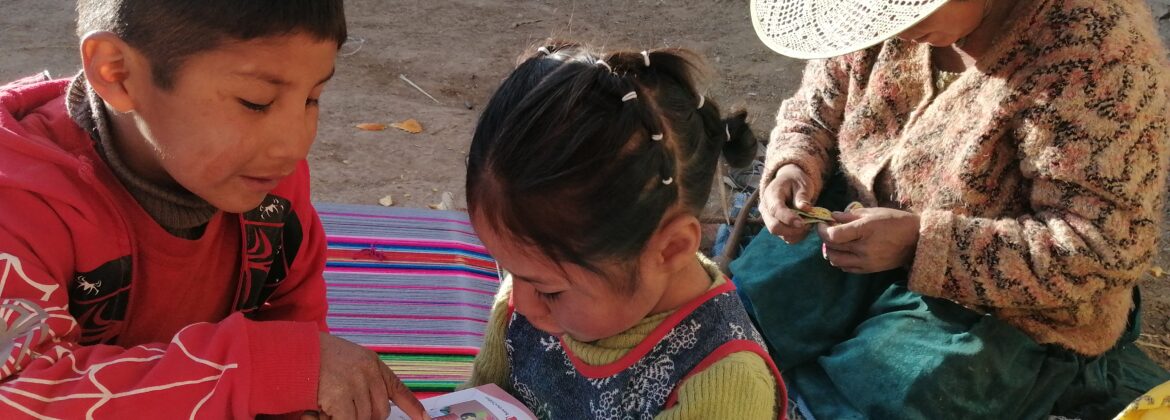
When the Community Leads, Reading Transforms
In Cochabamba, the Community Reading Clubs have been set up as an initiative promoted by Save the Children’s Sponsorship Program, in collaboration with Grassroots Territorial Organizations and community actors. Their objective was clear: to foster love for reading and strengthen reading comprehension among girls and boys, while creating safe spaces for learning and participation.
Over time, these spaces evolved. They ceased to be solely an educational strategy and became community platforms where values such as coexistence, reflection, solidarity and the participation of children, families and the community are strengthened.
This process was driven by local actors who took on a leading role. Community promoters became responsible for the day-to-day management of the clubs, energizing reading activities and ensuring their continuity. At the same time, leaders of the Grassroots Territorial Organizations assumed strategic leadership, positioning the clubs as an essential service for human development and exercise of children’s rights in their territories.
The result has been a profound process of empowerment. What began as a technically supported program has now become a community management model. Local organizations not only implement activities, but also plan, manage resources, coordinate with authorities and project sustainability.
The creation of the SoñaLibros (dream book) Association marks a milestone along this path. Emerging from the communities themselves, it serves as a body that connects and strengthens more than 20 reading clubs, consolidating itself as a collective structure with its own identity and long-term vision. SoñaLibros represents the transition from an externally promoted project to a self-managed movement led by local actors.
Today, the Community Reading Clubs are recognized by leaders and authorities as a strategic service. Their inclusion in municipal planning reflects a paradigm shift: reading and education are no longer complementary activities, but pillars for building citizenship.
This experience shows that localization is not merely participation. It is the transfer of capacities, leadership and sustainability. It is what happens when communities take ownership of solutions, adapt them to their reality and project them into the future.
Because when the community leads, it not only transforms learning spaces, but also writes its own future.