 Bolivia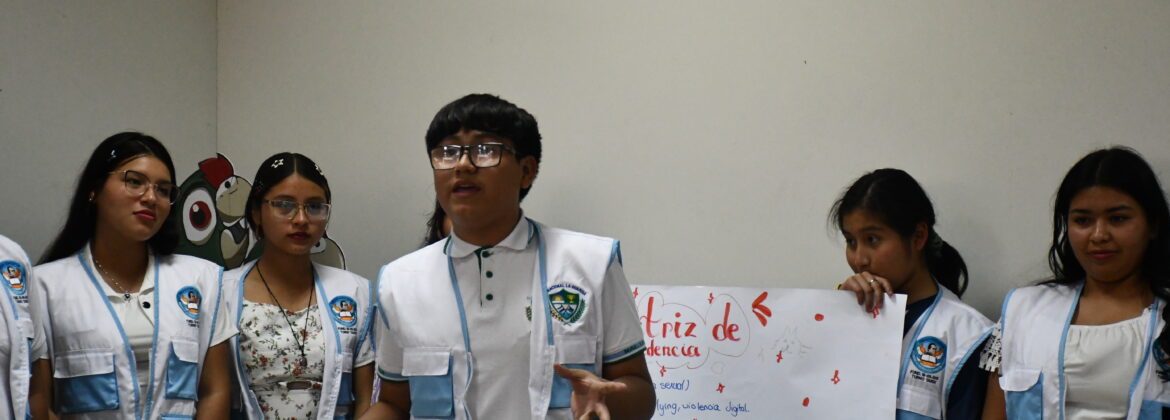
The Power of Local Actors in Preventing and Responding to Gender-Based Violence
In Bolivia, gender-based violence remains a serious and persistent reality, especially for adolescent girls and women. However, evidence shows that traditional responses, focused solely on the formal system, have not been sufficient to prevent it or to guarantee timely access to protection mechanisms.
In response to this challenge, Save the Children, in partnership with Casa de la Mujer (Women’s Home), proposes a clear approach: localization as both a principle and a practice. This means that responses are not designed from the outside but are built together with those who experience this reality: adolescents and young people, local organizations, communities and local governments.
The results are concrete. In the municipalities where the project “Prevention and Response to Gender-Based Violence”, co-funded by KOICA and Save the Children Korea, is being implemented, the protection ecosystem has been strengthened, bringing together different actors to prevent and respond to violence, including health, education and protection services, community leaders, families and local authorities. This coordination helped improve access to referral pathways, reduce barriers and build greater trust in the system.
One of the most significant changes has been the role of adolescents. Through student governments, youth networks and sustained training processes, adolescents and young people are taking on active leadership in preventing violence. They are not only participating; they have led campaigns, produced content, opened spaces for dialogue in their communities and presented proposals to local authorities. As one adolescent girl expressed, “our voice can indeed generate change.”
This involvement is not symbolic. It is part of a deeper transformation that challenges adult-centrism and recognizes adolescents and young people as key actors in social change.
At the same time, this youth leadership connects with other local actors, strengthening collective responses. Better-informed families, more aware communities, better-coordinated services and more committed authorities are all part of the same process.
This is the value of localization: when responses are built from the local level, with local actors, they become more sustainable, relevant and effective. The experience in Bolivia shows that preventing violence is not only an institutional task. It is a collective effort. And when communities, together with organized adolescents, lead that process, change stops being an aspiration and begins to become a reality.